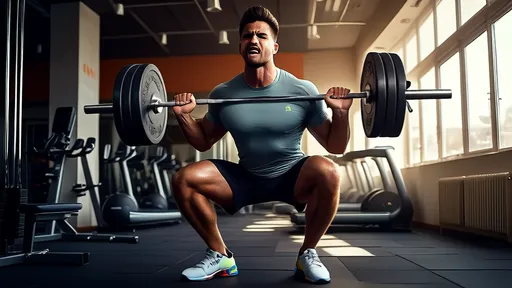
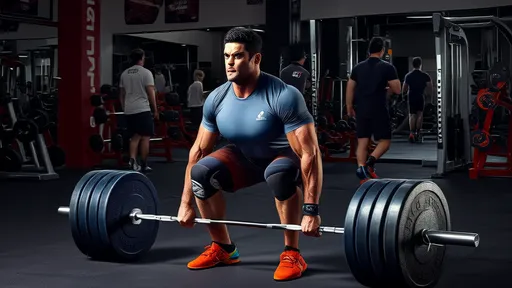
For years, squats have been both celebrated as a fundamental strength-building exercise and demonized as a potential knee destroyer. The debate often centers around one question: do squats inherently damage knees, or is proper form the ultimate protector? The answer lies somewhere between biomechanics, individual physiology, and movement quality.
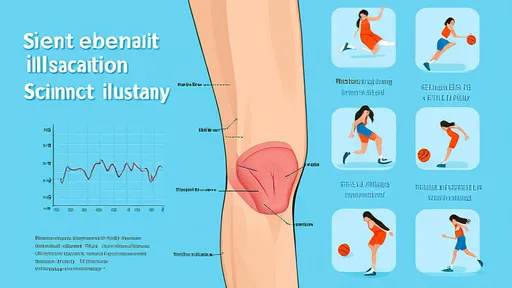
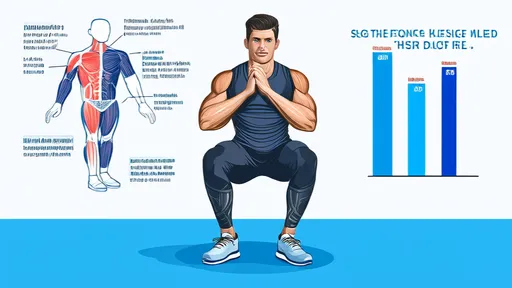
Knee joint forces during squats have been extensively studied in biomechanics labs worldwide. Contrary to popular belief, research shows that when performed correctly, squats distribute forces evenly across the knee's structures. The patellofemoral joint experiences about 7.6 times body weight during deep squats, but this loading pattern mimics natural human movement patterns our joints evolved to handle. The key distinction is that these forces become problematic only when combined with poor mechanics or pre-existing conditions.
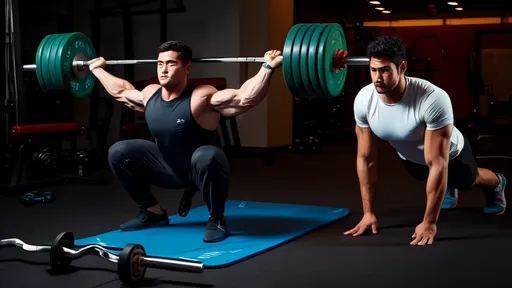
What constitutes "proper form" remains surprisingly controversial even among experts. The traditional cues—"knees behind toes," "chest up," "hips back"—while well-intentioned, often create more problems than they solve. Modern kinesiology research suggests form should be individualized based on anthropometry. A person with longer femurs will naturally have knees traveling forward, while someone with different proportions might maintain more vertical shins. The common denominator for safety isn't a rigid positional standard but maintaining proper joint stacking and tension distribution.
The depth debate represents another area where dogma conflicts with science. While some trainers insist parallel squats are safer, studies show deep squats (below parallel) actually increase glute and hamstring engagement while reducing sheer forces on the knees. The caveat? Depth should be determined by an individual's mobility and control rather than arbitrary standards. Someone with limited ankle dorsiflexion or hip mobility might indeed risk knee stress by forcing depth their body isn't prepared to handle.
Load management plays an equally crucial role in knee health as technique. Progressive overload—the gradual increase of stress placed on the body—must respect tissue adaptation timelines. Tendons and ligaments adapt more slowly than muscles, a fact many enthusiastic lifters overlook. Research indicates that sudden spikes in squat volume or intensity correlate more strongly with knee issues than the exercise itself. This explains why even technically sound squats can become problematic when programming ignores recovery needs.
Interestingly, squat variations affect knee forces differently. Front squats, for instance, create about 20% less patellofemoral compression than back squats at the same weight due to more upright torso positioning. Goblet squats often serve as excellent teaching tools, as the anterior load encourages proper torso alignment naturally. These alternatives don't necessarily make one variation "better," but they provide options for those with specific knee sensitivities.
The myth of cartilage wear deserves particular attention. Many avoid squats fearing they'll "grind away" knee cartilage. Current evidence suggests the opposite—appropriate loading through full range of motion may stimulate cartilage health. Like bone, cartilage responds to mechanical stress by strengthening. This explains why populations that regularly squat deeply (like agricultural workers in developing nations) show lower rates of osteoarthritis than sedentary Western populations.
Pre-existing conditions complicate the squat safety equation. Those with meniscus tears, ligament laxity, or advanced arthritis require modified approaches. However, complete avoidance often proves more detrimental than careful reintroduction. Physical therapists increasingly use squat progressions in knee rehabilitation, starting with partial range motions and gradually increasing depth as tissues adapt. The blanket "squats are bad for knees" advice fails to account for these nuanced clinical scenarios.
Foot positioning sparks endless debate in gyms worldwide. While some swear by wide-stance squats for knee relief, others find narrow stances more comfortable. Research reveals both can be safe—the critical factor being alignment of knees with toes during descent. Forcing an unnatural stance width (either too wide or too narrow) to conform to arbitrary standards often creates the very knee stresses people aim to avoid.
Eccentric control—the lowering phase of squats—emerges as perhaps the most overlooked safety factor. Rapid, uncontrolled descents generate peak forces up to 2.5 times higher than controlled movements. Teaching beginners to master the eccentric before adding significant load could prevent countless knee issues. This explains why tempo squats (with 3-5 second descents) feature prominently in both rehabilitation and elite athletic programs.
The warm-up effect significantly influences knee safety. Studies measuring synovial fluid viscosity show that properly warmed joints handle compressive forces far better than cold ones. This explains why knee pain often diminishes after initial sets despite identical loads. The practical implication? Rushing into heavy squats without adequate preparation violates basic joint physiology principles.
Cultural factors shape squat perceptions in unexpected ways. Western societies that abandoned deep squatting as a resting position show higher rates of knee complaints compared to cultures maintaining this habit. Anthropologists note that the ability to comfortably "ass-to-grass" squat correlates strongly with preserved knee function into old age. This suggests regular squatting through full ranges may serve as preventative maintenance rather than a damaging behavior.
Ultimately, the squat-knee relationship resembles most things in physiology—highly individual. Blanket pronouncements about safety or danger ignore the complex interplay of anatomy, training history, and movement quality. What remains undeniable is that squats, when appropriately programmed and executed, build resilient knees rather than destroy them. The exercise itself isn't the villain; improper application is.
By /Jun 19, 2025
By /Jun 19, 2025
By /Jun 19, 2025
By /Jun 19, 2025
By /Jun 19, 2025
By /Jun 19, 2025
By /Jun 19, 2025
By /Jun 19, 2025

By /Jun 19, 2025
By /Jun 19, 2025
By /Jun 19, 2025
By /Jun 19, 2025
By /Jun 19, 2025
By /Jun 19, 2025
By /Jun 19, 2025

By /Jun 19, 2025
By /Jun 19, 2025
By /Jun 19, 2025
