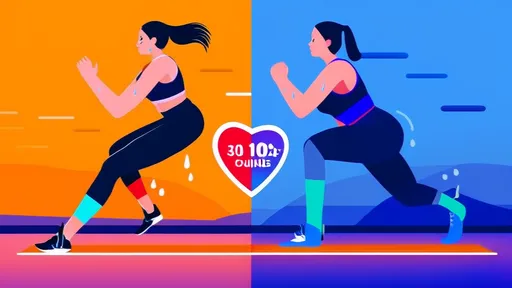
In recent years, high-intensity interval training (HIIT) has gained immense popularity as a time-efficient workout alternative to traditional steady-state cardio like jogging. The claim that 10 minutes of HIIT can equal an hour of slow running has been widely circulated in fitness circles, often accompanied by promises of rapid fat loss and improved cardiovascular health. However, beneath this enticing premise lies a more complex reality—one that requires a closer examination of how our hearts respond to such extreme demands.
The allure of HIIT is undeniable. In our fast-paced world, the idea of achieving significant fitness gains in just a fraction of the time is understandably appealing. The protocol typically involves short bursts of all-out effort—think sprinting, burpees, or kettlebell swings—followed by brief recovery periods. This cycle repeats for several rounds, creating what researchers call "metabolic stress," which indeed triggers various physiological adaptations. Studies have shown that HIIT can improve VO2 max (a measure of cardiovascular fitness) and insulin sensitivity comparably to longer endurance sessions.
However, the equation isn't as simple as 10 minutes = 60 minutes. While both modalities burn calories and benefit heart health, they do so through different mechanisms. Steady-state cardio primarily works the aerobic system, strengthening the heart's ability to pump blood efficiently over extended periods. HIIT, by contrast, pushes both aerobic and anaerobic systems to their limits, creating what some cardiologists describe as "controlled cardiac stress." This distinction becomes crucial when considering long-term heart health.
Emerging research suggests that repeatedly subjecting the heart to extreme HIIT sessions—especially without proper conditioning—may have unintended consequences. A study published in the Journal of the American College of Cardiology found that while moderate exercisers showed reduced mortality risks, those engaging in very high-intensity workouts had similar risks to sedentary individuals. This doesn't imply HIIT is dangerous per se, but rather that the dose makes the poison. The heart, like any muscle, requires progressive adaptation to handle intense workloads safely.
One often-overlooked factor is heart rate variability (HRV), a key indicator of cardiovascular resilience. During HIIT, heart rates can spike to 90-100% of maximum, compared to 60-70% during moderate jogging. While occasional spikes are normal (and beneficial for training adaptation), chronic excessive spikes without adequate recovery may lead to autonomic nervous system imbalance—where the "fight or flight" sympathetic system overpowers the restorative parasympathetic system. Symptoms can include persistent fatigue, sleep disturbances, and even arrhythmias in susceptible individuals.
Another consideration is the afterburn effect (excess post-exercise oxygen consumption, or EPOC), often cited as HIIT's magic bullet for calorie burning. While HIIT does elevate metabolism post-workout more than steady-state cardio, the actual difference amounts to just 6-15% additional calories over 24 hours—not the "hours of fat burning" sometimes claimed. Moreover, this effect diminishes as the body adapts. The real advantage lies in HIIT's ability to stimulate mitochondrial biogenesis (creating more cellular energy factories) more efficiently than prolonged moderate exercise.
Perhaps most critically, HIIT's effectiveness hinges on intensity authenticity. Many enthusiasts mistake hard effort for true high intensity—the difference between breathing heavily and reaching unsustainable exertion. True HIIT should leave participants unable to speak more than a word or two during active intervals. This level demands meticulous form to avoid injury, especially for beginners whose neuromuscular control may falter under fatigue. Without proper supervision, the risk-to-benefit ratio can skew unfavorably.
Cardiologists note another concern: the potential for transient cardiac strain during maximal efforts. While healthy hearts recover quickly, those with undiagnosed conditions (like hypertrophic cardiomyopathy or coronary artery disease) may face dangerous arrhythmias or even sudden cardiac events. This isn't to alarm but to emphasize the importance of pre-exercise screenings—especially for sedentary individuals jumping into intense protocols without gradual preparation.
The psychological impact also warrants attention. HIIT's demanding nature can trigger excessive cortisol production, particularly when combined with life stress. Some devotees develop an "all-or-nothing" mindset, abandoning exercise altogether when unable to complete brutal sessions. Contrastingly, steady jogging often provides stress relief through rhythmic, meditative movement—a benefit rarely quantified in metabolic studies but invaluable for long-term adherence.
So where does this leave time-crunched fitness seekers? The answer likely lies in periodized programming—alternating HIIT with moderate cardio and strength training. For general health, the American Heart Association recommends at least 150 minutes of moderate or 75 minutes of vigorous activity weekly, plus muscle-strengthening. This could translate to two HIIT sessions, two strength days, and one longer endurance session—a balanced approach that challenges the heart without overtaxing it.
Ultimately, comparing HIIT and steady-state cardio is like comparing sprinters and marathoners—both are athletes, but their training produces distinct adaptations. The "10 minutes equals 60" narrative oversimplifies human physiology. While HIIT offers remarkable efficiency for certain goals, it shouldn't wholly replace lower-intensity movement, which provides unique cardiovascular and recovery benefits. As with any powerful tool, the key lies in respecting its intensity, honoring individual differences, and listening when our hearts signal the need for moderation.

By /Jun 19, 2025

By /Jun 19, 2025
By /Jun 19, 2025

By /Jun 19, 2025

By /Jun 19, 2025

By /Jun 19, 2025

By /Jun 19, 2025

By /Jun 19, 2025

By /Jun 19, 2025
By /Jun 19, 2025

By /Jun 19, 2025

By /Jun 19, 2025

By /Jun 19, 2025

By /Jun 19, 2025
By /Jun 19, 2025

By /Jun 19, 2025

By /Jun 19, 2025

By /Jun 19, 2025
