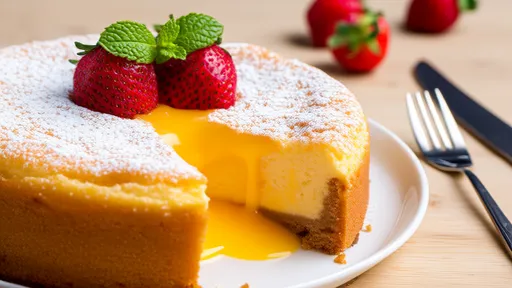
The allure of Kunafa lies in its delicate balance of textures and flavors—crispy shredded pastry, molten cheese, and fragrant sugar syrup. At the heart of this Middle Eastern dessert’s magic is the art of achieving the perfect cheese pull, a moment where the melted cheese stretches into golden threads as a slice is lifted. But mastering this iconic pull requires precision in both baking and syrup application, a dance of heat and timing that separates good Kunafa from extraordinary.
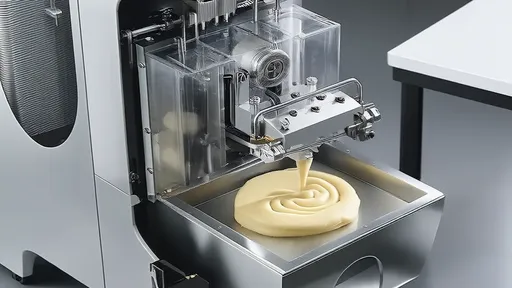
The foundation of Kunafa’s texture begins with its signature shredded pastry, kataifi. These fine, vermicelli-like strands are buttered and layered, either encasing the cheese or forming a nest atop it. When baked, the pastry transforms into a crisp, golden lattice, its structural integrity crucial for supporting the weight of the cheese. Underbake it, and the pastry sags; overbake it, and the delicate strands turn brittle, shattering under the fork. The ideal bake achieves a shattering crispness that yields audibly while retaining enough flexibility to cradle the molten core.
Cheese selection is equally pivotal. Traditional recipes call for Nabulsi or Akkawi cheese, brined varieties that offer both salinity and elasticity. Modern adaptations sometimes blend these with fresh mozzarella for extra stretch. The cheese must be soaked to remove excess salt, then patted dry to prevent moisture from steaming the pastry during baking. When heated, the proteins in the cheese relax into a viscous state, but achieving the right viscosity—where the cheese stretches without breaking—depends on the oven’s precise temperature and the pastry’s insulation.
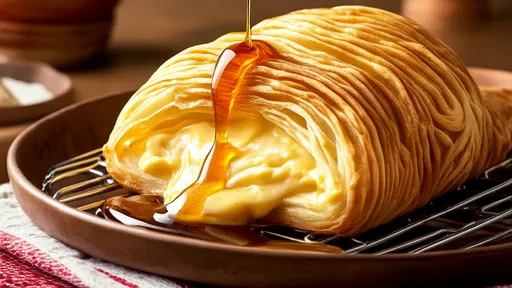
The syrup’s role is deceptive in its simplicity. A blend of sugar, water, and lemon juice, sometimes perfumed with rose or orange blossom water, the syrup must be cooled before meeting the hot Kunafa. Pouring cold syrup over the freshly baked dessert creates a thermal shock that seals the pastry’s crispness while preventing the cheese from becoming soggy. Too early, and the syrup evaporates under residual heat, leaving an overly sweet crust; too late, and the cheese begins to stiffen, losing its signature pull. The perfect moment is when the Kunafa has just left the oven, its cheese at peak elasticity, the pastry still whispering with heat.
Regional debates simmer over syrup timing. In Lebanon and Syria, syrup is often applied immediately after baking, creating a lacquered sheen. In Turkey, some recipes call for brushing syrup between pastry layers before baking, allowing the dessert to absorb moisture gradually. Yet regardless of technique, the goal remains universal: a bite where crisp strands give way to cheese that stretches like sunlight, all bound by syrup that sings rather than cloys.
Beyond technique lies Kunafa’s cultural resonance. It’s a dessert of celebration, served at weddings and Eid feasts, its preparation often a communal effort. The act of pulling apart a steaming tray—cheese stretching like silk—becomes a shared joy, a tactile connection to tradition. In diaspora kitchens, adaptations emerge: pistachio toppings in Gulf variations, cream fillings in Egyptian versions. Yet the pursuit of that perfect pull remains a unifying thread, a testament to a dessert that’s both timeless and endlessly reinvented.
For home cooks attempting Kunafa, patience is key. Rushing the bake or syrup risks a dessert that’s either sodden or desiccated. But when the cheese stretches in a flawless arc, the pastry crackles, and the syrup glistens like amber, the effort transcends technique. It becomes alchemy—a transformation of flour, cheese, and sugar into something ephemeral yet unforgettable.

By /Jun 18, 2025
By /Jun 18, 2025
By /Jun 18, 2025
By /Jun 18, 2025
By /Jun 18, 2025
By /Jun 18, 2025
By /Jun 18, 2025
By /Jun 18, 2025
By /Jun 18, 2025

By /Jun 18, 2025

By /Jun 18, 2025
By /Jun 18, 2025
By /Jun 18, 2025
By /Jun 18, 2025
By /Jun 18, 2025
By /Jun 18, 2025
By /Jun 18, 2025
