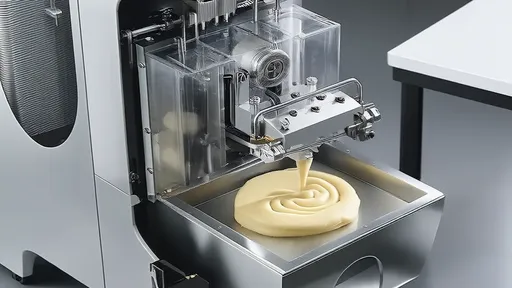
The intersection of culinary arts and additive manufacturing has opened up fascinating possibilities in food customization, with 3D printed cookies standing at the forefront of this innovation. Unlike traditional cookie production, 3D printing allows for intricate designs and personalized nutrition. However, the success of this technique hinges on one critical factor: the precise formulation of the cookie dough, particularly the starch-to-liquid ratio, which directly impacts extrusion flowability during printing.
Starch as the Backbone of Printability
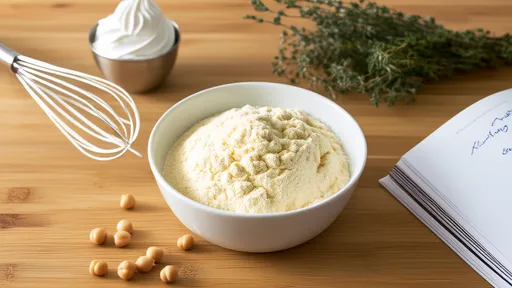
Starch plays a dual role in 3D printable cookie dough—it provides structural integrity while influencing the material's viscoelastic properties. When hydrated, starch granules swell and gelatinize, creating a network that holds the dough together. Too little starch results in a runny batter that collapses during printing, while excessive starch leads to clogged nozzles and uneven extrusion. The ideal ratio varies depending on the starch type; for instance, wheat starch requires a lower percentage (around 20-25% of dry weight) compared to tapioca starch (30-35%) to achieve comparable flow characteristics.
The temperature-dependent behavior of starch further complicates the equation. During extrusion, the mechanical shear force generates heat, causing partial starch gelatinization that thickens the dough mid-print. This phenomenon necessitates careful temperature control of the printing environment. Some researchers have found success with modified starches like hydroxypropylated corn starch, which maintains consistent viscosity across a broader temperature range, enabling longer printing sessions without nozzle blockages.
Liquid Components: More Than Just Solvents
While starch forms the skeleton of printable dough, the liquid phase acts as both a plasticizer and a rheology modifier. Water content typically ranges between 15-30% in printable formulations, but innovative bakers are replacing portions of water with ingredients that serve multiple functions. Egg whites, for example, contribute proteins that enhance layer adhesion during printing while providing leavening during baking. Dairy liquids like yogurt introduce lactic acid, which subtly alters starch gelatinization temperatures.
The viscosity profile of the liquid component significantly impacts extrusion dynamics. Newtonian liquids like simple syrups flow too readily, while pseudoplastic fluids (such as those containing xanthan gum) exhibit shear-thinning behavior ideal for 3D printing—they flow easily under the printer's pressure but hold shape upon deposition. Recent experiments with emulsion-based liquids (oil-in-water) have shown promise in reducing dough stickiness to printer components without compromising structural integrity.
Beyond Ratios: Particle Size and Hydration Time
Less discussed but equally vital are the physical characteristics of starch particles and their hydration kinetics. Finely milled starches (below 50μm) hydrate more uniformly, preventing localized dry spots that cause extrusion inconsistencies. However, excessively fine powders can lead to doughs that are overly cohesive, making them difficult to extrude smoothly. A balance is achieved through particle size distribution—formulations combining medium (50-100μm) and fine particles demonstrate better flow characteristics than monodisperse distributions.
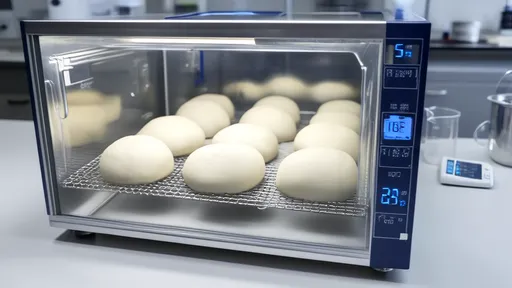
Hydration time emerges as an often-overlooked variable. Industrial operations might favor doughs that hydrate quickly, but for 3D printing, a slower hydration rate (achieved through controlled water addition or temperature modulation) allows for longer working times before the starch network becomes too rigid. Some advanced formulations incorporate delayed hydration mechanisms, such as encapsulating portions of starch in heat-sensitive coatings that only release upon baking, maintaining extrudability throughout the printing process.
The Feedback Loop: Real-Time Flow Monitoring
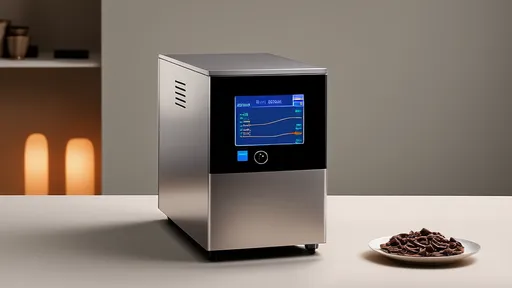
Modern food 3D printers are beginning to incorporate rheological sensors that monitor extrusion force and adjust parameters dynamically. When the system detects increased resistance (indicating starch thickening), it can either increase pressure or momentarily raise nozzle temperature to reduce viscosity. This closed-loop control compensates for minor formulation inconsistencies, making the printing process more forgiving of imperfect dough preparations.
Machine learning algorithms trained on successful prints can now suggest formulation adjustments—for instance, recommending a 2% increase in water content when particular geometric features consistently fail to print accurately. This marriage of culinary tradition and artificial intelligence represents the next frontier in edible 3D printing, where the machine doesn't just execute designs but actively participates in recipe optimization.
As the technology matures, we're seeing a convergence of food science and engineering principles that were previously separate domains. The humble cookie dough, reimagined through the lens of additive manufacturing, becomes a complex biomaterial whose behavior must be precisely tuned across multiple physical and chemical dimensions. What began as a novelty has evolved into a serious scientific pursuit, with implications extending far beyond cookies—into personalized nutrition, space food production, and sustainable food systems.
By /Jun 18, 2025
By /Jun 18, 2025
By /Jun 18, 2025
By /Jun 18, 2025

By /Jun 18, 2025
By /Jun 18, 2025
By /Jun 18, 2025
By /Jun 18, 2025
By /Jun 18, 2025
By /Jun 18, 2025

By /Jun 18, 2025

By /Jun 18, 2025
By /Jun 18, 2025
By /Jun 18, 2025
By /Jun 18, 2025
By /Jun 18, 2025
By /Jun 18, 2025
